
If you’ve ever wondered why some websites consistently appear at the top of Google while others remain invisible, the answer usually comes down to SEO.
SEO, or Search Engine Optimization, is the process of improving a website so search engines can understand, index, and rank it more effectively. When done correctly, SEO helps businesses attract qualified visitors without paying for every click.
For businesses in Singapore, Australia, and other competitive markets, SEO has become one of the most cost-effective ways to generate leads, sales, and long-term growth.
What Is SEO?
SEO (Search Engine Optimization) is the practice of increasing a website’s visibility in organic search results on search engines such as Google and Bing.
The goal is simple:
When potential customers search for products, services, or information related to your business, your website appears prominently in search results.
For example:
- A dentist in Sydney wants to rank for “emergency dentist Sydney”
- A law firm in Singapore wants to rank for “corporate lawyer Singapore”
- An ecommerce store wants to rank for “buy office chairs online”
SEO helps these businesses become discoverable when people actively search for what they offer.
Unlike paid advertising, SEO focuses on earning traffic naturally through relevance, authority, and user experience.
How SEO Works
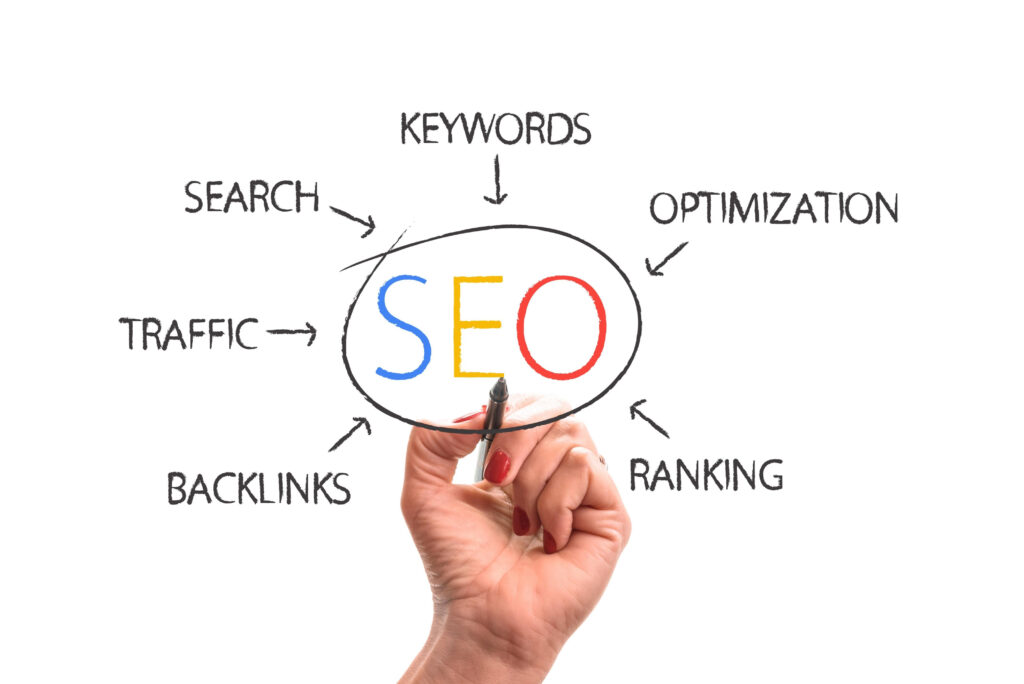
Search engines use complex algorithms to determine which pages deserve to rank for specific searches.
The process can be simplified into three stages:
1. Crawling
Search engines use automated programs called crawlers or bots to discover webpages.
These bots follow links across the internet and collect information about websites.
If a page cannot be crawled properly, it may never appear in search results.
2. Indexing
Once discovered, search engines analyze and store page information in their index.
Think of the index as a massive digital library containing billions of webpages.
A page that isn’t indexed generally cannot rank.
3. Ranking
When someone performs a search, the search engine evaluates thousands of factors to determine which pages provide the best answer.
Ranking factors include:
- Content relevance
- Website authority
- Backlink quality
- User experience
- Page speed
- Mobile friendliness
- Search intent alignment
The pages that best satisfy the searcher’s intent typically appear higher in results.
Why SEO Is Important
Many business owners focus heavily on social media or paid advertising while overlooking SEO.
The reality is that search traffic often converts better because users are already looking for a solution.
Higher Visibility
Most online experiences begin with a search engine.
If your website isn’t visible when customers search, you’re losing opportunities to competitors.
Consistent Organic Traffic
Paid ads stop generating traffic when the budget runs out.
SEO can continue driving visitors long after content is published.
Better Quality Leads
SEO attracts users with clear intent.
Someone searching “accounting services Singapore” is already interested in finding a provider.
Increased Credibility
Users often trust businesses that appear on the first page of Google.
Strong rankings create perceived authority within your industry.
Long-Term Return on Investment
SEO requires investment, but the cumulative benefits can continue for years when strategies are maintained properly.
The Main Types of SEO

SEO is often divided into several categories.
On-Page SEO
On-page SEO focuses on elements within your website.
Examples include:
- Keyword optimization
- Content quality
- Title tags
- Meta descriptions
- Internal linking
- Header structure
- Image optimization
Good on-page SEO helps search engines understand what a page is about.
Technical SEO
Technical SEO improves how search engines access and process your website.
Key areas include:
- Site speed
- Mobile responsiveness
- XML sitemaps
- Structured data
- Crawlability
- HTTPS security
- Core Web Vitals
Even excellent content can struggle if technical issues prevent proper indexing.
Off-Page SEO
Off-page SEO focuses on building authority outside your website.
The most important factor is backlinks.
Backlinks are links from other websites pointing to your pages. Search engines often view these as endorsements.
However, quality matters far more than quantity.
A single link from a respected industry publication may provide more value than dozens of low-quality links.
Local SEO
Local SEO helps businesses appear in location-based searches.
Examples include:
- “SEO company near me”
- “Best plumber Melbourne”
- “Accounting firm Singapore”
Local SEO typically involves:
- Google Business Profile optimization
- Local citations
- Reviews
- Location-specific content
What Makes a Website Rank Higher?
There isn’t a single ranking factor.
Google evaluates numerous signals simultaneously.
Some of the most influential include:
Content Quality
Content should answer user questions clearly and thoroughly.
Thin, duplicated, or outdated content rarely performs well over time.
Search Intent Alignment
A common mistake is targeting keywords without understanding what users actually want.
For example:
Someone searching “what is SEO” wants education.
Someone searching “SEO company Singapore” is likely looking for services.
Different intent requires different content.
Backlinks
Authoritative websites linking to your content signal trustworthiness.
Natural, relevant backlinks remain one of the strongest ranking signals.
User Experience
Search engines increasingly evaluate how users interact with websites.
Important factors include:
- Fast loading pages
- Easy navigation
- Mobile usability
- Readability
- Clear page structure
Topical Authority
Businesses that consistently publish helpful content within their niche often build stronger authority than websites covering unrelated subjects.
Common SEO Mistakes Businesses Make
Many websites struggle because of avoidable issues.
Focusing Only on Keywords
SEO is no longer about repeating keywords throughout a page.
Modern search engines understand context, synonyms, and user intent.
Ignoring Technical Issues
Broken pages, slow load times, and indexing problems can limit rankings regardless of content quality.
Buying Low-Quality Backlinks
Cheap link packages often create more problems than benefits.
Poor-quality links can damage trust signals.
Publishing Thin Content
A 300-word article rarely outperforms a genuinely useful resource that answers user questions thoroughly.
Expecting Immediate Results
SEO takes time.
Depending on competition and website authority, meaningful results often take several months.
How Long Does SEO Take?
One of the most common questions businesses ask is how quickly SEO works.
The honest answer is: it depends.
Factors include:
- Industry competition
- Website age
- Existing authority
- Technical health
- Content quality
- Link profile
Generally:
- Initial improvements: 1–3 months
- Noticeable growth: 3–6 months
- Significant results: 6–12 months+
Businesses in competitive industries may require longer timelines.
SEO is often compared to investing rather than advertising. Results accumulate over time.
Should You Hire an SEO Company?
Some business owners manage SEO internally.
Others work with an SEO company to accelerate growth.
An experienced SEO company can help with:
- Keyword research
- Technical audits
- Content strategy
- On-page optimization
- Link acquisition
- Local SEO
- Performance tracking
The key is choosing a company that focuses on sustainable strategies rather than shortcuts.
Be cautious of agencies promising:
- Guaranteed #1 rankings
- Thousands of backlinks overnight
- Instant results
Search engines don’t work that way.
A trustworthy SEO partner focuses on measurable business outcomes rather than vanity metrics.
For businesses seeking professional SEO support, working with an experienced team such as RankMints can help develop a strategy aligned with long-term growth objectives.
What Does SEO Success Look Like?
Many businesses measure SEO solely through rankings.
Rankings matter, but they’re only part of the picture.
Strong SEO typically leads to:
- Increased organic traffic
- More qualified leads
- Higher conversion rates
- Greater brand visibility
- Reduced customer acquisition costs
- Sustainable business growth
The most valuable SEO campaigns connect search visibility directly to revenue and business outcomes.
Final Thoughts
SEO is the process of making your website more visible when people search for information, products, or services online.
It combines content quality, technical performance, authority building, and user experience to improve rankings and attract qualified traffic.
Businesses in Singapore and Australia increasingly rely on SEO because it generates consistent, high-intent visitors who are already looking for solutions.
While SEO requires patience, it remains one of the most effective digital marketing investments for long-term growth when executed correctly.